
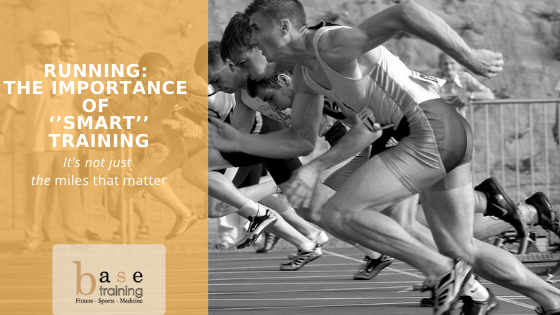
Running: The importance of “smart” training – It’s not just the miles that matter
We are used to more and more training volume in order to achieve our goals. But the transition from more training to smart training is not the easiest process… Especially when it comes to running! When the gyms closed in early March due to the Corona-virus, many people decided to hit the streets and start running, mainly to feel better.
PERSONAL TRAINING CERTIFICATION
There is nothing more simple as running … We all have done it at some point in our lives and at the same time, we need nothing but a pair of shoes. It seems, however, that this very simplicity of running as a form of exercise can act as a brake on the development of the runner and on his / her improvement. Courtnay Osborne-Walker, a coach who specializes in running and creator of the online sports community “Cardio Collective”, typically states that running may seem easy in general, but it is a complex activity. It requires stability, speed and strength”. Most people may think that a gradual increase in the running distance is the best way to improve their performance, but counting kilometres is not necessarily the smartest way.
BECOME A SPORTS TRAINER
“I believe that distance only favors comparisons with other runners”, says Courtnay Osborne-Walker. If you see running only as a process that helps you feel better physically and mentally, then go out and do as many miles as you can. But if you want to really improve in this area, be happy to learn that sometimes shorter distances have more benefits than endless miles, as long as you have the right strategy.
Running – walking
For most, the tactic for a beginner runner to improve is to first be able to run 5 milometers, then 10 kilometres, then to be able to run a half marathon and of course, finally to become a proper marathon runner. However, there are strategies that can be applied between these goals that will help a runner improve and enjoy this journey more. One of them is running with walking breaks. According to the coach, “this strategy helps the trainee to build greater endurance in running”. For beginners, an approach can be a leisurely run and a leisurely walk. This way, they can get used to kinesiology more easily, and they will be given the necessary time to gain more confidence.
Pyramid – Training
Pyramid training is suggested to more experienced runners, who want to improve the endurance of their legs. These are basically interval training, during which you gradually reduce the time you run, while taking some breaks, in which you walk. “An example, which I personally apply to my trainees, is 12, 10, 8, 6 and 4 minutes of running, with a two-minute walk in between each time,” explains Courtnay Osborne-Walker.
Training for running without… running
And of course, one of the smartest ways to improve running technique and strength is to do workouts that do not involve running at all! Functional training is probably the most appropriate method of training, in order to properly prepare for a road race and be able to show your true abilities. According to the specialized coach, “ideally, someone who wants to level-up their running, should do functional training. This will improve their athletic performance but also reduce the chance of an injury”.